
Volkswagen ID. Polo 155kW Style Launch Edition 52kWh 5dr Auto
- Automatic
- Electric
- 5 door hatchback
/?format=webp)
/?format=webp)
/?format=webp)
/?format=webp)
/?format=webp)
/?format=webp)
/?format=webp)
/?format=webp)
/?format=webp)
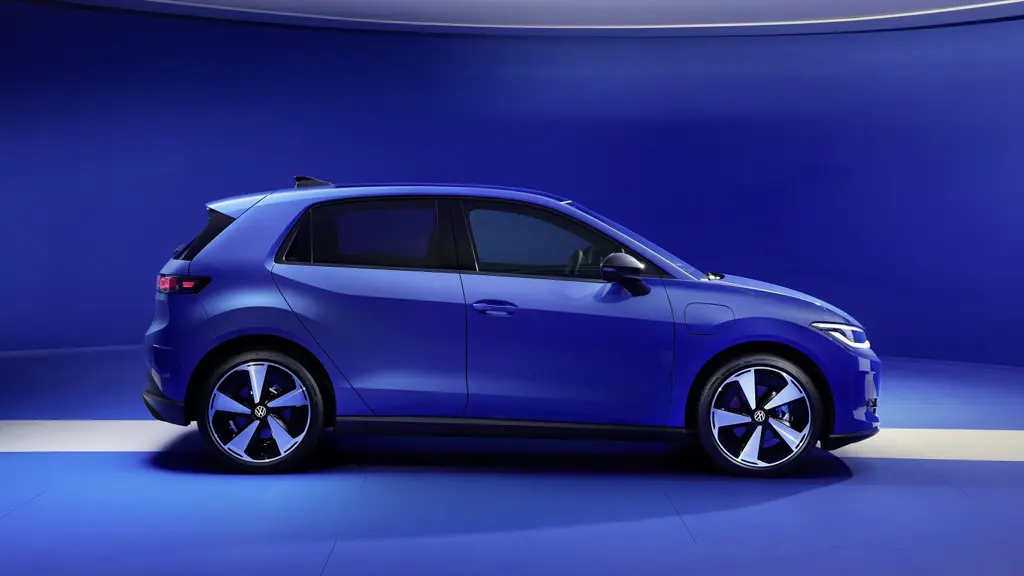
Images shown are for illustration purposes only
-
7.1 secs 0 to 62 mph
-
211 bhp Engine power
-
275 mi Combined range
-
55 kWh Battery capacity
-
8 yrs Battery warranty
8 years or 100,000 miles
Ten Second Review
Volkswagen reinvents the Polo supermini for the electric era - as it reinvents the way its products meet the needs of long-standing customers. The ID.Polo is practical, frugal - and accessible to people yet to be converted by the idea of an EV. It's a very important small car indeed.
Background
'True Volkswagens are back' - or so the brand tells us with this car, the ID.Polo. If you find that difficult to believe, given that this, the Wolfsburg maker's smallest EV yet is built in Spain and shares 80% of its components with two other members of the VW Group's 'Urban Electric Family', the Skoda Epiq and the CUPRA Raval. Despite all of this, the ID.Polo has its own very distinct 'Volkswagen' look. And has been engineered to drive in a manner recognisable to loyalists of 'The Peoples' Car' brand who may have been put off by the abrasively futuristic ID.3. Mentioning that EV reminds us that throughout most of its development, this car was slated to be named 'ID.2' - until that plan was abandoned as part of the 'True Volkswagen' programme's bid to make the marque's models feel friendly and familiar again. In many ways, this is the most important EV the brand has launched yet, paired with the identically-engineered ID.Cross small electric SUV and sitting alongside the old (and continuing) combustion Polo supermini. Let's take a closer look.
Engines and Tech Spec
You might think that this could be where the 'true Volkswagen' mantra somewhat falls apart. Design, after all, is relatively easy to brand-personalise. But it's less easy for Wolfsburg to convince potential ID.Polo customers that this is more than just a badge-engineered CUPRA Raval (or indeed the Skoda Epiq small crossover) when all the engineering seems just the same. The drivetrains are, there's no getting away from that. But Volkswagen says it set its own distinct parameters for suspension, chassis tuning and refinement. Which broadly means that you can expect an ID.Polo to be more comfort-orientated and less sporty than a Raval; the differences against an Epiq are less easily defined. As for those drivetrains, well the volume sales are focused around a rather small-sounding 37kWh LFP battery with a choice between two front-mounted motor variants, one with 116PS, the other with 135PS. If you want more than the modest 206 miles of range that package will give you, you'll be directed to the ID.Polo with the larger 52kWh NMC battery, which works with a 211PS motor and offers up to 281 miles of range. The same bigger battery is used by the top ID.Polo GTI, paired with a 226PS motor. 0-62mph with the GTI takes just 6.8s. The motor used across the mainstream ID.Polo line-up is the VW Group's latest-generation APP290 unit, notable because its advanced power electronics make it so light. This contributes to handling agility and is a key reason why the car tips the scales at no more than around 1,500kg, notably light for an EV. All ID.Polos get brake regen steering wheel paddles, with near 'one-pedal' driving possible on the fiercest setting. Towing capacity is up to 1,200kg.
Design and Build
If the ID.Polo already looks familiar, that's because it's supposed to. Designed by ex-Bentley stylist Andreas Mindt in just a few weeks over Christmas 2022, it sets the visual tone for a whole new generation of Volkswagens with what the brand hopes are 'friendly eyes and a likeable smile'. At 4.05-metres long, it's basically the same size as a combustion Polo and uses the classic angled VW C-pillar, a styling cue that goes all the way back to the Golf MK1. There's a long wheelbase and short overhangs for extra cabin space. And wide tracks and large sculpted wheelarches housing rims from 17 to 19-inches, all giving a stable, planted look. That shouldn't date too quickly, though the in-vogue badge lighting theatrics front and rear might. The rear light signature is inspired by whiskey glasses. Inside up-front, the brand hopes you'll agree that the true spirit of Volkswagen has returned to the company's cabin design. Instead of the cheap-feeling tech-led vibe of early ID models, there's a solid familiar-feeling button-led interior. There are no silly sliders or haptic switchgear and nothing feels particularly cheap, with fabric dashboard inserts and subtle interior lighting offering a welcoming ambiance. There's even a nod to the past from the 11.25-inch instrument screen, which can display with a recreated set of dials from an early '80s Polo. And from the 13-inch landscape central infotainment monitor, which nostalgic folk can set to show with a graphic of an old cassette tape. As in the ID.3 Neo, beneath the screen is a row of physical controls, mainly for climate functions. There's also a rotary dial situated between storage compartments on the centre console, this able to control audio volume or change tracks or radio stations. The new-shape wheel has welcome physical buttons too. As with all the MEB+ platform models, rear seat space is notably more generous than you'd expect from a car of this size - it's nearly as roomy as a Golf. A tall adult could easily sit behind a tall driver. The real benefits of this advanced platform though, are found in the huge 441-litre boot (61-litres bigger than a Golf). So the pram or stroller that wouldn't fit in the back of a combustion Polo (which offers 350-litres) will fit here, helped by a false floor under which you can store bulky items like that - or maybe plants or a case of drinks. You will also have to fit the charging leads under here though because no under-bonnet 'frunk' space is provided for them.
Market and Model
Thanks to all the engineering commonalities across the VW Group MEB+ platform models (which apparently unlocked 650 million euros of development saving), Volkswagen says it's been able to keep ID.Polo prices low. The asking figures begin at about £24,000 for the smaller 37kWh battery, where just over £1,00 more is required to progress from the feebler 116PS motor to the beefier 135PS unit. You're looking at needing to pay from just over £28,000 for an ID.Polo with the larger 52kWh battery (which can only be had with a 211PS motor). Whatever size of battery you choose, there are two trim levels - 'Life' and 'Style' (with initial 'Launch Edition' versions of both). If you're wondering about eligability for the government Electric Car Grant, only the 52kWh versions qualify for that - at the lower £1,500 grant level. To give you some segment perspective, the prices being asked here are just above a Fiat Grande Panda Electric but at above the same level as a Renault 5 E-Tech. If you're wondering about the top ID.Polo GTI hot hatch version, well you'll need a lot more for one of those - budget closer to £35,000. Equipment levels are quite generous. Even base 'Life'-spec versions get parking sensors, driving mode selection, a rear-view camera, a 12.9-inch infotainment screen, wireless phone charging with AppConnect and a height-adjustable boot floor. Stretch to a plusher 'Style' version and you'll also get IQ.LIGHT LED matrix headlights, illuminated logos and a front light bar, interior ambient lighting with the 'ID.Light' system, 18-inch alloy wheels, sports comfort seats in the front and 'play' and 'pause' accelerator and brake pedals. Luxury options include features like a panoramic glass roof, electrically-adjustable front seats and a 10-speaker Harmon Kardon audio system upgrade. If you've enough in your budget, you can add equipment items that you might not expect to find in this class of car. Like Volkswagen's semi-autonomous 'Connected Travel Assist' drive system (which can even bring the car to a halt at red traffic lights); and massaging front seats. There's also lots of auto-parking tech, including a set-up that learns previous manoeuvres (say into your tight garage) and can automatically repeat them; and one allowing you to stand outside the car and park it with your smartphone.
Cost of Ownership
DC charging speed is one area where this ID.Polo isn't particularly advanced. The smaller 37kWh battery DC-charges at only 90kW. Even the larger 52kWh pack can only DC-replenish at a maximum of 105kW. It seems disappointing that sensible DC-replenishment speeds are still restricted to pricier cars. Still, a 10-80% DC-charge of the smaller battery can be done in 23 minutes; it's 24 minutes with the larger battery. Home AC charging from a single phase 7.4kw wallbox takes around 6 hours with the smaller battery and about 8 hours 30 minutes with the larger one - that's for a full charge. With the 37kWh ID.Polo, you can reduce your full charge time down to about 4 hours if you're able to AC charge using a three-phase 11kW wallbox. With that 11kW AC wallbox, the full charging time for a 52kWh ID.Polo would be about 5 hours 30 minutes. As you'd expect, these are the same figures as you'd get with the equivalent CUPRA and Skoda versions of this MEB+ design. As usual, charging can be controlled via the centre screen or by using the company's smartphone app. The ID.Polo can also offer bi-directional charging to feed energy back into the grid (though we can't really imagine many occasions on which you'd want to). And this Volkswagen can be specified with a V2L charger to power up your gadgets from the car's drive battery. The Wolfsburg maker says that its aim is to make sure that the battery pack lasts as long as the car and, sure enough, that battery pack is warrantied to have at least 70% of its usable capacity after eight years or 100,000 miles.
Summary
No other electric Volkswagen has been designed so specifically around the way it will be used. If you've owned or used a Polo in the past, liked it but ultimately wanted something a bit more, then the ID.Polo might be just about perfect, provided of course that you're prepared to make the seismic switch to EV motoring. Unlike with the original ID.3, it's not necessary to explain what this car's about; you can see and feel it's a Volkswagen. And it represents 'just the beginning' of a huge reinvention for the company's EV line-up.
- Adaptive cruise control ACC stop and go
- Advanced driver attention and drowsiness monitor
- Driving mode selection
- Dynamic road sign display
- Front and rear parking sensors
- Lane keeping system plus semi-automatic vehicle control in a medical emergency
- Oncoming vehicle braking when turning including swerve support
- Power assisted speed sensitive steering
- 2 USB C ports in front, 2 USB charging sockets on the centre console in the rear charging capacity upto 45W
- 6+1 Speakers
- Digital radio reception DAB+
- Diversity antenna for FM reception
- Body colour bumpers
- Body colour door handles
- Illuminated door handle recesses
- Nameplate set in basic style
- Panoramic sunroof
- Rear side wing doors
- 12V power socket in centre console
- Black roof lining
- Center console
- Ceramique roof lining
- Door and side trim panel
- Pedals in stainless steel with play and pause symbols
- Seat trim covers in fabric
- Soul black dashboard
- Standard pedal cluster
- Variable luggage compartment floor 2 heights
- IQ LED matrix headlights pack - ID. Polo
- Seat comfort package - ID. Polo
- Technology pack Style - ID. Polo
- Winter pack - ID. Polo
- 3 point automatic seatbelts in front without height adjustment
- Driver and front passenger airbag with front passenger airbag deactivation
- Drivers and front passengers safety optimised head restraints
- First aid kit with warning triangle and safety vest
- Front and rear curtain and side airbags with center airbag
- Manual child lock in rear doors
- Two tone horn
- Tyre pressure loss indicator
- Warning signal and warning light for front and rear seatbelts not fastened
- Anti-theft alarm system with interior monitoring, backup horn, and towing protection
- Anti-theft wheel bolts
- Electronic engine immobiliser
- Keyless locking and starting system keyless access with safelock
- Battery Capacity % guaranteed under warranty: 70
- Battery Capacity in kWh: 55
- Battery Charging Scenario 1 - Charge Time (Mins): 330
- Battery Charging Scenario 1 - Percentage Change: 0-100
- Battery Charging Scenario 1 - Power Supply - kW: 11
- Battery Charging Scenario 2 - Charge Time (Mins): 24
- Battery Charging Scenario 2 - Percentage Change: 10-80
- Battery Charging Scenario 2 - Power Supply - kW: 105
- Battery Charging Scenario 3 - Charge Time (Mins): N
- Battery Charging Scenario 3 - Percentage Change: N
- Battery Charging Scenario 3 - Power Supply - kW: N
- Battery Charging Scenario 4 - Charge Time (Mins): N
- Battery Charging Scenario 4 - Percentage Change: N
- Battery Charging Scenario 4 - Power Supply - kW: N
- Battery Leased: False
- Battery Type: Lithium-ion
- Charging Port Location: Right Side Front
- Coupler/Connector Type: CCS Type 2
- Maximum Charging Rate - kW: 105
- Standard manufacturers Battery warranty - Mileage: 100000
- Standard manufacturers Battery warranty - Years: 8
- Usable Battery Capacity: 52
- WLTP - EC (kWh/100km) - Comb: 13.8
- WLTP - EC (miles/kWh) - Comb: 4.5
- WLTP - Pure Electric Range (km) - City: 577
- WLTP - Pure Electric Range (km) - Comb: 442
- WLTP - Pure Electric Range (km) - Comb - TEH: 442
- WLTP - Pure Electric Range (km) - Comb - TEL: 442
- WLTP - Pure Electric Range (miles) - City: 359
- WLTP - Pure Electric Range (miles) - Comb: 275
- WLTP - Pure Electric Range (miles) - Comb - TEH: 275
- WLTP - Pure Electric Range (miles) - Comb - TEL: 275
- CO: N
- CO2 (g/km): 0
- HC: N
- HC+NOx: N
- NOx: N
- Particles: N
- Camshaft: N
- Catalytic Convertor: N
- CC: 1
- Compression Ratio: N
- Cylinder Layout: N
- Cylinders: N
- Cylinders - Bore (mm): N
- Cylinders - Stroke (mm): N
- Engine Layout: N
- Fuel Delivery: N
- Gears: 1 SPEED
- Number of Valves: N
- Transmission: AUTO
- AdBlue: N
- Alternative Fuel Qualifying: True
- Badge Engine CC: 0.0
- Badge Power: 211
- Based On ID: 110986
- Coin Description: N
- Coin Series: Style Launch Edition
- Generation Mark: 1
- Man Corrosion Perforation Guarantee - Years: 12
- Manufacturers Paintwork Guarantee - Years: 3
- Service Interval Frequency - Months: 24
- Service Interval Mileage: N
- Special Edition: True
- Special Order: False
- Standard manufacturers warranty - Mileage: 60000
- Standard manufacturers warranty - Years: 3
- Timing Belt Interval Frequency - Months: N
- Timing Belt Interval Mileage: N
- Vehicle Homologation Class: M1
- 0 to 62 mph (secs): 7.1
- Engine Power - BHP: 211
- Engine Power - KW: 155
- Engine Power - PS: True
- Engine Torque - LBS.FT: 214
- Engine Torque - MKG: 29.6
- Engine Torque - NM: 290
- Top Speed: 99
- Emissions Test Cycle: WLTP
- RDE Certification Level: N/A
- Alloys: True
- Space Saver: False
- Tyre Size Front: 215/50 R18
- Tyre Size Rear: 215/50 R18
- Tyre Size Spare: TYRE REPAIR KIT
- Wheel Style: CARDIFF
- Wheel Type: 18" ALLOY
- Height: 1530
- Length: 4053
- Wheelbase: 2592
- Width: 1816
- Fuel Tank Capacity (Litres): N
- Gross Vehicle Weight: 2020
- Luggage Capacity (Seats Up): 441
- Max. Loading Weight: 519
- Max. Towing Weight - Braked: 1200
- Max. Towing Weight - Unbraked: 750
- Minimum Kerbweight: 1501
- No. of Seats: 5
- Turning Circle - Kerb to Kerb: 10.9